




Referees’ reputations are being impugned by politicians. FIFA needs to defend them
Politics and sport have always been uneasy bedfellows, but until recently referees and other sport officials have rarely been dragged into the public discourse.
Our decisions are pored over relentlessly, which is all part of the rough and tumble that goes with the job. But as the arbiters of fairness, we have largely swerved being attacked by those seeking to exploit the game for political gain.
The convention has been for politicians to accept referees are neutral, honest and doing their best, and to leave us alone.
That has always suited referees, as we want to stay out of the spotlight whenever possible. Even between ourselves, we describe success by putting a positive spin on a negative metric. We speak lovingly about “staying out of trouble”, “keeping our heads below the parapet” and “staying off the radar”.
A vain few revel in the public attention, but the vast majority like to go unnoticed. We want 22 handshakes at the final whistle and to avoid being name-checked in match reports.
That has become increasingly difficult as the level of scrutiny increases year-on-year, while standards of behaviour on and off the field inexcusably continue to fall. Turn back the clock and there may have been less money at stake, but don’t tell me that the players, coaches and fans of the 20th century cared any less about the outcome. They just knew how to behave.
Politicians think that national sporting success can give them a bounce in the polls, even though there is little proof this is the case.
My biggest brush with a political figure came on a trip to Istanbul in 2017, when I was part of the team overseeing Fenerbahce against Austrian side Sturm Graz in the Europa League.
After the match, the Turkish FA representative assigned to look after us entered the changing room to tell us excitedly that the president was on his way. We assumed it was the honorary figurehead of the home club or national football association.
When the doors swung open, in walked Recep Tayyip Erdogan, early in his presidency of Turkey, with a vast entourage and film crew.
We fixed grins and went with the flow. Erdogan shook referee Bobby Madley’s hand and would not let go, commending him on his performance through an interpreter. He eventually moved along the line to one of the assistant referees and patted him on the chest while commending his impressive pectorals.
Erdogan was right — Madley had refereed well and those pecs are amazing — but that’s not the point. No one watching on TV could hear what was being said, so those watching had to fill in the gaps. It could well have looked like he was thanking us for ensuring Fenerbahce’s safe passage to the next round.
Travelling home the next morning, we strolled into the airport lounge and discovered our encounter with Erdogan was headline news, and that video of our brief meeting was being repeated ad nauseam every 15 minutes. The looped repetition made it feel like a modern-day VAR check, but thankfully no harm was done.
Erdogan’s visit felt genuine, but political interest nowadays is often laced with more sinister motives, and at this World Cup referees have been kicked like political footballs more than ever.
Before the tournament began, Somalian referee Omar Artan was denied entry to the U.S. by Customs and Border Control amid a dispute about his visa.

Omar Artan is embraced by Pierluigi Collina, chairman of the FIFA referees committee, in 2025 (Martín Fonseca/Eurasia Sport Images/Getty Images)
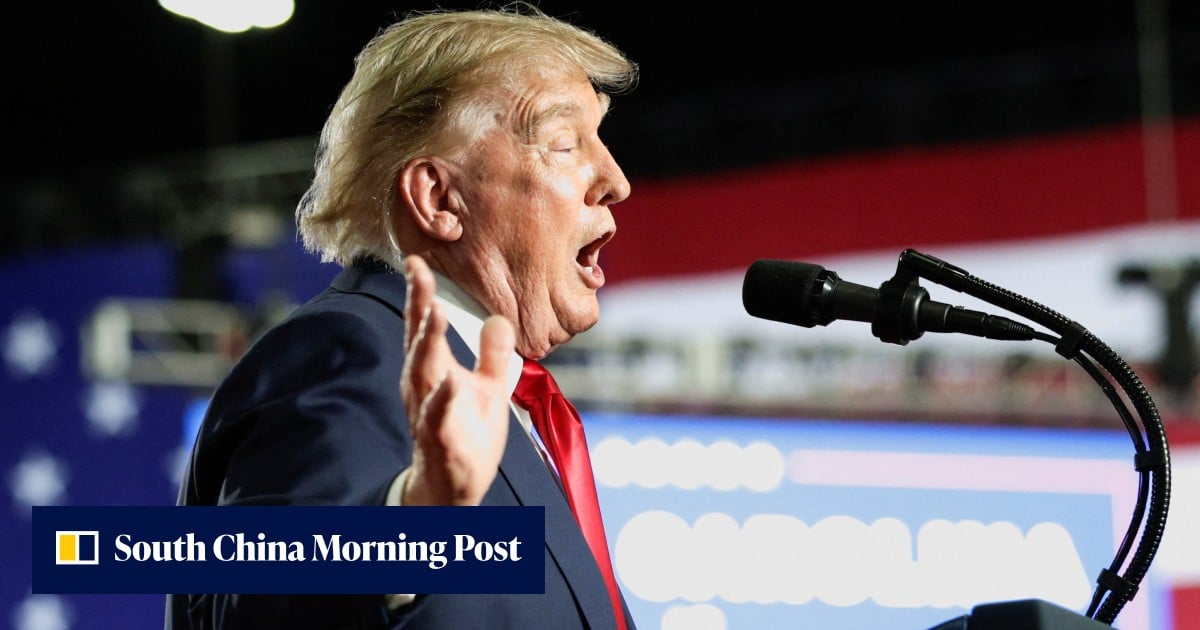
Pressed on Artan’s treatment at the height of the row, President Donald Trump replied: “We’re working on it very closely to make sure that the right people come into our country.” Whatever that means.
Shamefully, FIFA president Gianni Infantino let events take their course and while he blew in the wind, Artan was hung out to dry.
Whatever his immigration status, it was reasonable to assume that Artan posed no threat to the U.S. given he had been handpicked by Infantino’s organisation following an exhaustive selection process. There is no record of any other referee being denied entry to a World Cup host country since the first tournament in 1930.
In an interview with the New York Times, Artan insisted his documentation had been in order. “I am very, very disappointed,” he said. “I’m simply a referee who’s trying to live his dream, the biggest dream of my life, to come to the World Cup.” Let’s hope he gets another chance in four years’ time.
A few weeks later, Trump revealed he had contacted Infantino about the red card handed out to Folarin Balogun, the U.S. striker, by Brazilian referee Raphael Claus against Bosnia and Herzegovina.
Much worse from a referee’s viewpoint, Trump labelled Claus “a little bit suspect”, casting unjust and unnecessary aspersions on someone with no right of reply. Andrew Giuliani, head of the president’s World Cup task force, went further by saying Claus had “a chequered past”.
Once again, Infantino went uncharacteristically shy and did not put his name to a FIFA statement which said that Claus has “consistently demonstrated the highest standards of professionalism and integrity” throughout his career.
FIFA head of referees Pierluigi Collina added: “He is an experienced and highly respected referee, and we maintain full confidence in him as a trusted match official.”
Such statements affirming a referee’s honesty should not be necessary. Refs want a quiet life. We love the game, enjoy being in the thick of the action, and tolerate people questioning our decisions because some are wrong and many more are debatable. But we recoil in horror whenever someone questions our integrity or hints we have been unfair.
When that does happen, it is vital that referees are defended by the bodies they represent — in this case, FIFA. Sadly, it has not done enough of that this summer.
The best part of the Balogun saga came in the match between the U.S. and Belgium. Jordanian referee Adham Makhadmeh stayed out of trouble, kept his head below the parapet and stayed off the radar. He would have been delighted.