





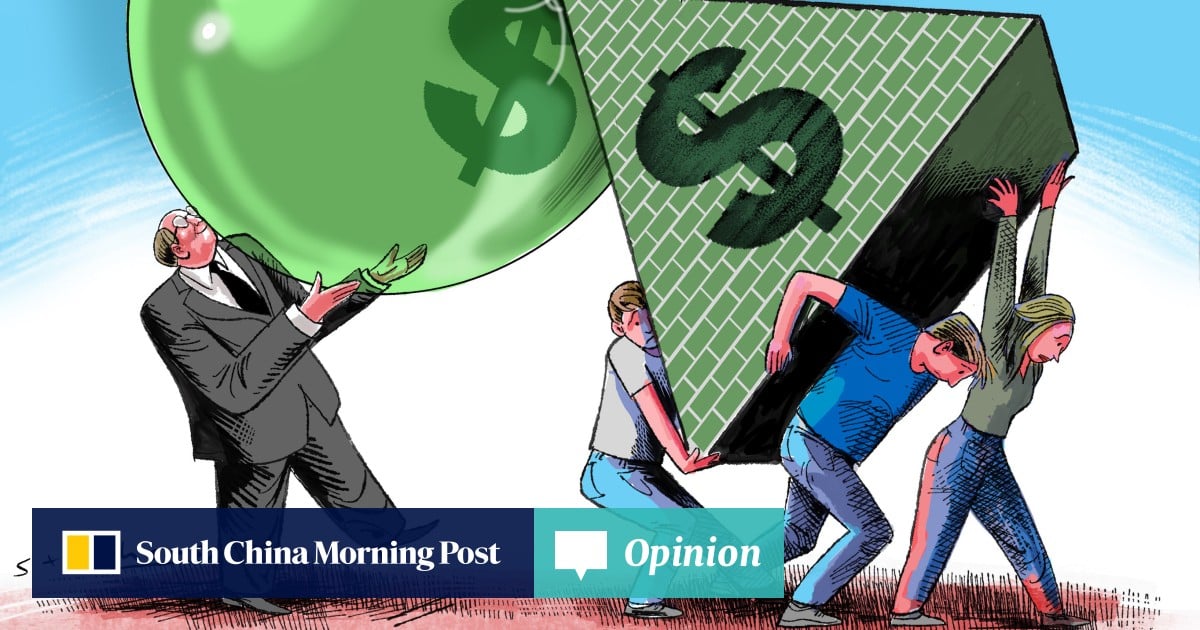
Opinion | A healthy economy isn’t built on asset bubbles and debt pyramids

In the animated Soviet film The Golden Antelope, inspired by Indian folklore, a magical antelope tries to save a boy from a greedy raja by promising him as much gold as he wants. When she asks whether there can be too much, the raja laughs: “You can never give me too much gold.” But when the gold begins to bury him, he cries “enough” – and loses everything.
According to the World Federation of Exchanges, global stock market capitalisation rose by 18.5 per cent in 2025, to reach almost US$152 trillion.
The UBS Global Wealth Report 2026, published on June 30, shows that global personal wealth grew by 10.8 per cent in dollar terms in 2025, much faster than in previous years. UBS counted 3,302 US dollar billionaires, 383 more than a year earlier, an increase of almost 13.1 per cent.
More than 1,000 were in the United States, 562 in mainland China and 211 in India. Yet behind these headline figures lies a more complicated picture: wealth is rising in large part because asset values are increasing at the upper tiers of the wealth pyramid.