


Opinion | EU isn’t just selling aircraft to China. It’s helping strengthen a competitor
Last month, China Eastern ordered 25 A330neo jets from Airbus, which come at a catalogue price of US$9.35 billion. The airline, which operates the inaugural commercial routes of the C919, China’s home-grown passenger jet, had placed another Airbus order just three months earlier.
Why is this major Chinese airline transferring billions to a European company China’s government is trying to supplant?
As a widebody jet, the A330neo competes in a segment where the Commercial Aircraft Corporation of China (Comac) currently has no product, so this is not a simple hedge against delays. These orders represent something more strategic: capital paid now for operational knowledge, trained personnel and supply-chain integration that China’s aviation sector will absorb over time.
This fits a clear pattern. Earlier this year, China’s Civil Aviation Administration (CAAC) reportedly withheld approvals for nearly 20 completed Airbus aircraft, an episode Airbus CEO Guillaume Faury described as an “administrative delay”. The hold-up contributed to the lowest first-quarter deliveries for Airbus since 2009 and left roughly €5 billion (US$5.7 billion) in completed aircraft undelivered. Analysts noted the obvious: the Airbus relationship has become leverage for Beijing’s pressure on the European Union.
Generosity one month, coercion the next. That is not inconsistency. It is leverage, applied through different instruments towards the same long-term goal.
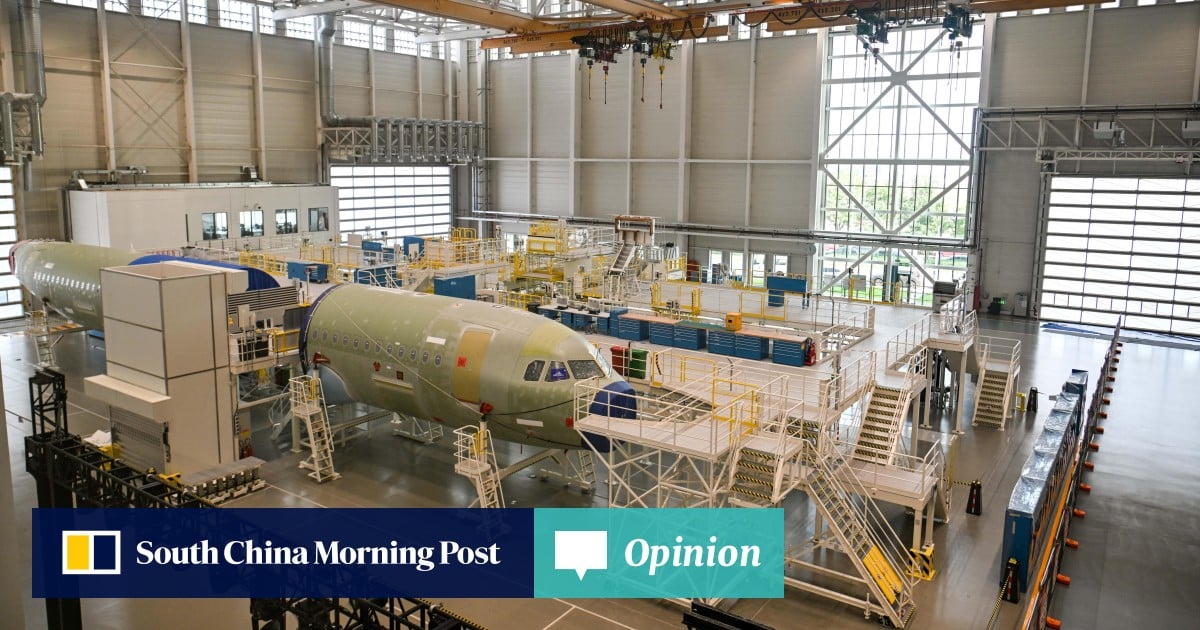
The relationship that makes this possible was built over two decades. It deepened last October when Airbus opened its second A320 family assembly line in Tianjin, its 10th final assembly line worldwide. This came just nine days after a similar ceremony in Mobile, Alabama, a sequence seen as intended to balance US-China trade tensions. Since 2008, the Airbus operation in Tianjin has assembled more than 780 A320 aircraft. Last year, Airbus held 55 per cent of China’s commercial aircraft market, with most of its Tianjin production going to Chinese airlines.