

Are Portugal any good at this World Cup?
Every statistical forecast model worth its salt had Portugal among the favourites to win the 2026 World Cup ahead of the tournament.
A simple glance at Roberto Martinez’s squad would have been enough to convince you the individual talent at his disposal was among the best of any nation, arguably only bettered by Didier Deschamps’ France.
Despite such quality and depth, Portugal stuttered to the knockout stage with two draws and a single victory to finish second in Group K and set up a round-of-32 clash with Croatia. They still have a strong opportunity to go far in the tournament, but there is still a lingering question to answer: are Portugal actually… any good?
Stylistically, Martinez wants his side to be protagonists on the ball, dominating possession and quickly regaining control when they lose it. With the technical quality they have in midfield, the profiles of Vitinha, Joao Neves and Bruno Fernandes can dominate any game by themselves with the ball. How well they can match that as the tournament’s best out-of-possession team remains a point of contention.
Portugal swept Uzbekistan aside with a 5-0 victory on matchday two, but a single shot on target against DR Congo and a blank against Colombia does point to an underperformance in their chance creation.
It can be hard to break down low blocks. Portugal joined Spain, England, the Netherlands and Belgium in dropping points during group games when playing against stubborn defences that look to condense space.
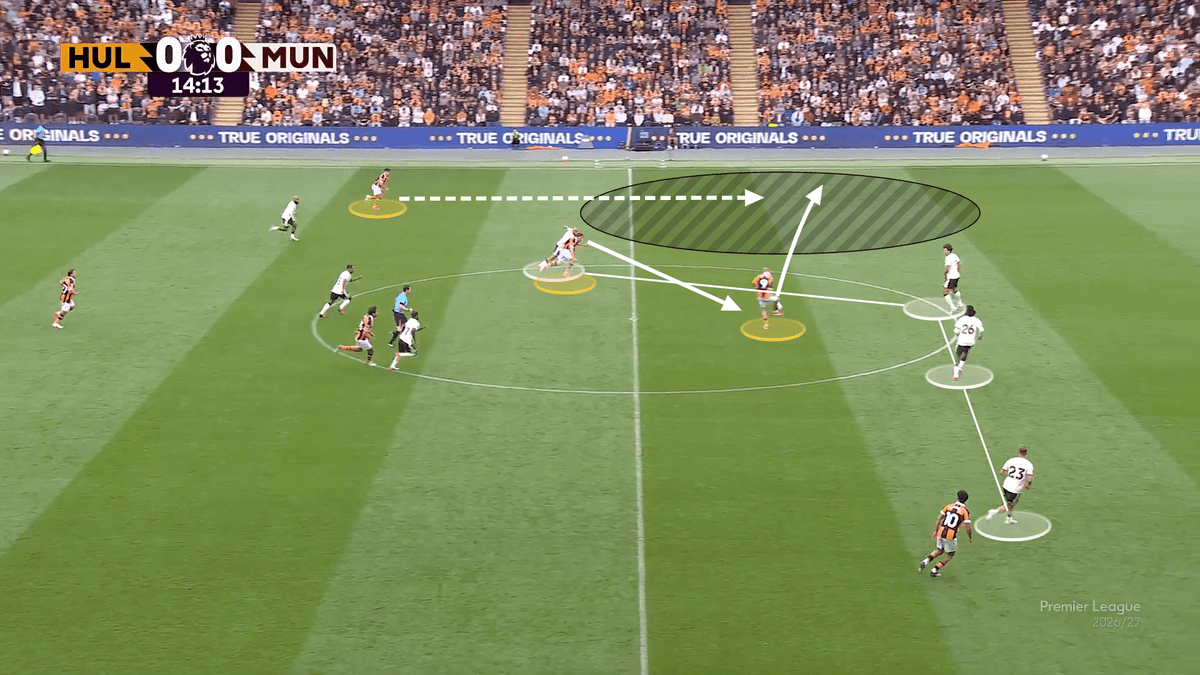
With Vitinha at the base of midfield, Portugal’s centre-backs will often split wide during build-up – or a full-back will tuck in to help form a back three — which allows Martinez’s side to push five players on to the opposition back line and create maximum width to stretch the play.

As shown above, this was a clear method of attack against DR Congo, but became an infrequent sight as the game wore on. With the match largely in front of the opposition block, Portugal’s attacking threat grew increasingly static.
The Cristiano Ronaldo-shaped elephant in the room is impossible to avoid here.
There were two well-taken goals against Uzbekistan, but the 41-year-old was otherwise kept largely quiet in the remaining group games — despite his, and his team-mates’, best intentions to bottleneck the attack towards him.
Ronaldo’s reduced mobility has been used as a stick to beat him with, but that argument lacks perspective. According to FIFA’s data, 50 per cent of his total distance covered has been walking during this tournament — but Lionel Messi’s share has been 62 per cent.
Two per cent of Ronaldo’s runs have been sprints. Messi? Just 0.9 per cent.
Some of the star players of the tournament need their weaknesses to be mitigated by their team-mates, allowing them to maximise their strengths. You only need to look at the last World Cup to see how Messi’s team-mates facilitated their star man physically, to help him work his magic on the way to Argentina’s third World Cup victory.
Much was spoken about the positions Ronaldo was taking up in their opening game, often keeping himself offside when DR Congo pushed up the pitch. This was viewed as a negative by some, but it was intelligent centre-forward play to occupy centre-backs outside their field of view and act as a decoy to make space for his team-mates elsewhere.
This has also been an established tool to beat the offside trap, and nearly worked on multiple occasions. As shown below, Ronaldo is comfortably offside and unmarked, but some smart double movement from Bruno Fernandes (central) and Pedro Neto (left) sees Neto get in behind DR Congo’s defence ahead of their captain.
As he looks to play the ball across, the 41-year-old is now onside and ahead of the opposition defenders to attack the cross.

A similar situation occurred against Uzbekistan, where Joao Neves releases Joao Cancelo on the right touchline — with a square ball to Ronaldo only possible because of the initial offside position he took up.

“When we have the ball, we need a strong personality and a clear vision of how to reach the opponent’s penalty area,” Martinez said before Portugal’s clash with Uzbekistan.
“We need a player who can create space, and Cristiano is the best at doing that. The statistics confirm it. He is an icon. Those movements and the way he creates space ultimately make him the final piece that completes our strategy.”
That tactic is only effective against a lower-ranked team where you are expected to dominate possession, but it can be a tricky sell to Portugal fans when Martinez’s side come up against stronger opposition.
Still, those rotations were among the most effective methods of attack for Portugal. Stretching the back line laterally across the pitch is one thing, but more was required to ask questions vertically to open up space in behind.
Ronaldo’s presence clearly does still have an effect, with his run towards the ball dragging DR Congo’s defence with him, which made space for Nuno Mendes to run in behind. More examples of the clip below would be welcomed by Martinez.

Vitinha and Joao Neves operate so well together at Paris Saint-Germain because they can dictate the tempo of the game while their attacking team-mates rotate around them – making it impossible for opponents to track runners.
Ronaldo is clearly more economical with his running — staying more static between the width of the goalposts — meaning Portugal are less fluid across the front line. When the attack becomes predictable, that controlled possession can appear a little more stale compared with the club football that the midfield duo are accustomed to.
This is not exclusively a Ronaldo issue, and simply swapping him out for Goncalo Ramos would be an overly simplistic fix.
A question lies elsewhere. Bernardo Silva, Joao Felix and Fernandes all have incredible technical quality when playing ahead of Vitinha and Joao Neves, but are their profiles a little too similar?
Portugal will often engage in wide combinations with players who can retain possession in small spaces, but with so many players wanting the ball to feet, those passes can sometimes fail to test the opposition back line.
Shuffling the opposition across to make space for a switch to the far side is a viable method of attack, but that can then come at the cost of a central box presence, with Portugal lacking runners beyond the ball.

That athleticism to run in behind often has come from left-back Mendes or Neto on either flank, with Portugal looking most threatening against Uzbekistan when they worked the ball into wide areas for early crosses to attack.
It might not please one or two Portuguese stars, but replacing a ball-to-feet profile for the dribbling style of Rafael Leao might bring more attacking balance — with Neto on the opposite flank — with more purposeful running that could unlock space elsewhere.
Defensively, Martinez can point to just one goal conceded across Portugal’s three group games, but there were warning signs from their World Cup opener as DR Congo managed to break free on the counter-attack.
Ronaldo’s lack of defensive contribution remains a contentious issue, but Martinez has still designed a way for his side to press man-for-man high up the pitch at times — leaving Ronaldo central to cover the goalkeeper and far-side centre-back if the ball is turned over.

When Portugal do fall into a structured block in their own half, they will often drop Neto deeper to form a back five – a common tactical demand in the modern game — to allow the back line to shuffle across.
Below are two examples of Portugal dropping deeper to form a 5-4-1, although eagle-eyed viewers will notice that Ronaldo is not in the shot on either occasion.

Portugal’s biggest warning sign came in their final clash, with Colombia managing 24 shots on goal — their most recorded in a World Cup game.
Against a team of higher quality, Portugal were less able to prevent Colombia from building through the pitch, with a staggered front three in their defensive shape as Vitinha and Ruben Neves went man-for-man in the middle.
This was easily bypassed by a good possession side, with the space in the middle third being far too big — allowing Colombia to switch play easily. They crafted a good opportunity on goal from the sequence below as they worked the ball into the final third with ease.

With upcoming opponents Croatia providing a sterner test in possession, Portugal’s defensive display will be under greater scrutiny. However, Martinez might look to England’s clash with Croatia as a blueprint for success, with more opportunity to counterpress and spring forward to exploit the space in behind — rather than breaking down a stubborn low block.
An example of this can be seen in Ronaldo’s second goal against Uzbekistan, where Portugal get six bodies around the ball as it runs loose. A quick release from Felix finds Fernandes, who can drive forward and pick out Ronaldo ahead of him in a transitional moment.

Martinez has already experienced the task of maximising the talents of a golden generation with Belgium. The political landscape around the inclusion of Ronaldo is a tricky one to navigate, but the tactical questions run deeper than a single player.
Portugal know what it means to win a major international tournament after a slow start, winning Euro 2016 after three consecutive draws during the group stage.
On the evidence we have seen this summer, they need to go up another gear once again if they are going to stick around until the latter stages.