






The View | To win the chip war, China needs a multinational strategy
Much of these exports are mature logic integrated circuits for applications in consumer electronics and automotive sectors. While the US is the undisputed leader in the most advanced artificial intelligence (AI) chips, China is emerging as a dominant player in mass market legacy integrated circuits.
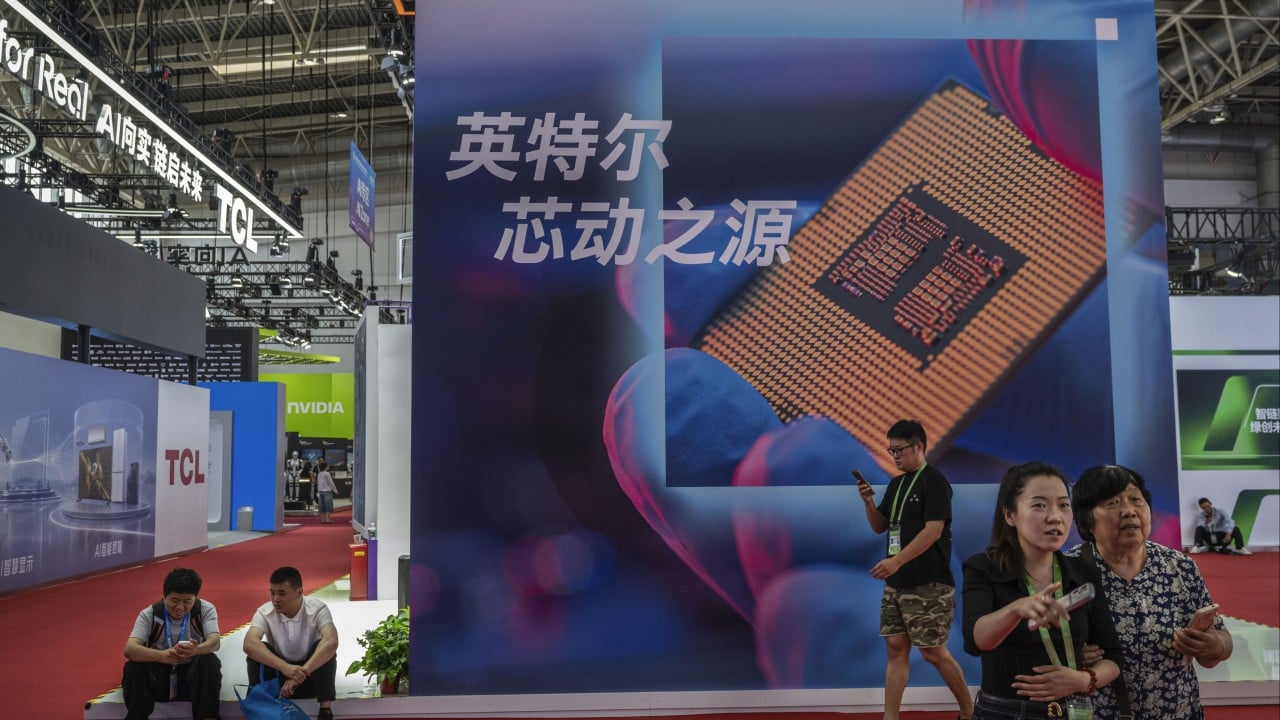
Between the two is the central processing unit (CPU) layer, the brains of laptops and servers. Before the AI era, Intel CPUs once symbolised American semiconductor leadership. As AI transitions from model training to applications, CPUs will regain importance in the next five years.
Although the CPU segment has long been dominated by Intel and AMD, Chinese firms are closing the gap. It is a more contestable arena where China has a more realistic chance of becoming self-sufficient over time.
Another key segment is memory chips, which the United States ceded to East Asia decades ago. Samsung Electronics and SK Hynix together account for two-thirds of the global dynamic random access memory (DRAM) market, while Japanese firms continue to have a critical role in the supply chain upstream.