Opinion | The US-China relationship has stabilised but on Beijing’s terms
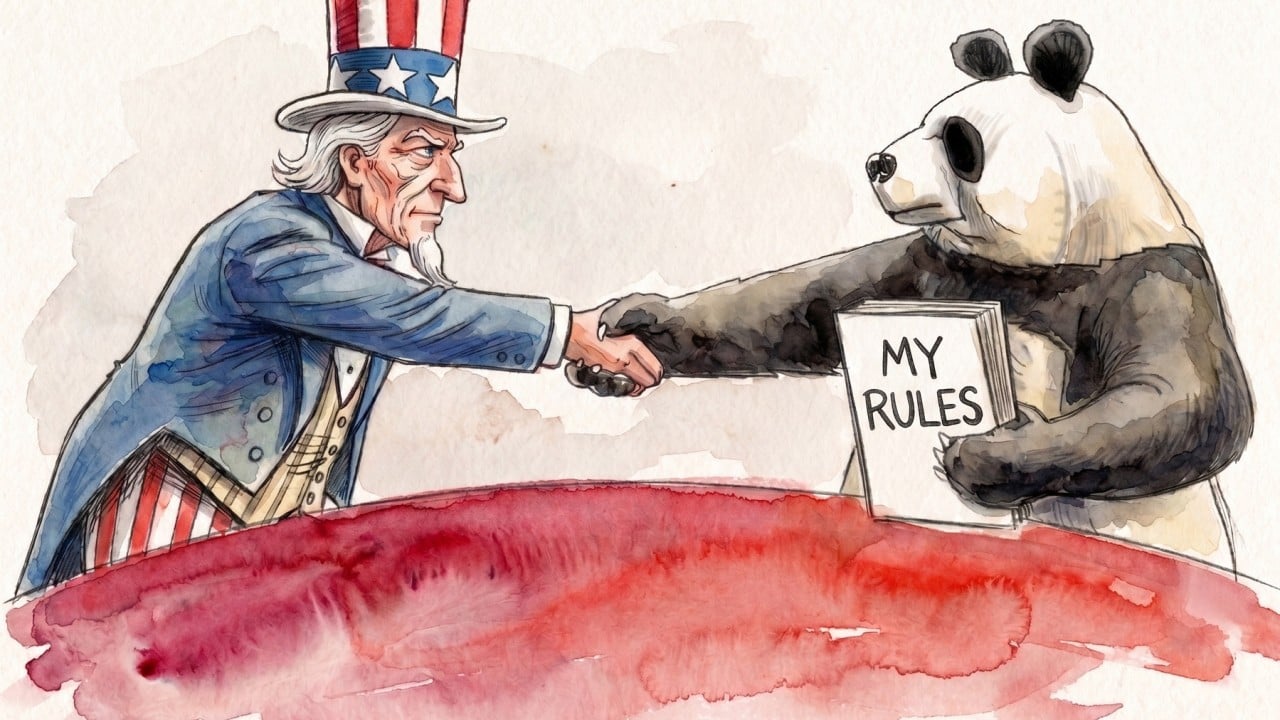
For all the solemnity of the B-2 flyover with four F‑22 Raptors and a silent South Lawn drill, the real business of US President Donald Trump’s meeting with Chinese President Xi Jinping last week was narrower than the choreography. The Chinese readout reiterated the concept that should frame the relationship’s next phase: constructive strategic stability – cooperation as the primary track, competition kept within bounds, differences managed, conflict avoided.
Stripped of banquet rhetoric, the Washington leg of the 2026 Xi-Trump cycle cements a managed rivalry on Beijing’s terms: China sets the boundaries while Washington – constrained by rare earth dependence, market jitters and a crowded election calendar – accepts stabilisation over confrontation.
Trump called it a “great meeting” and revived the “friendship” trope; Xi was more doctrinal. Having previously raised the Thucydides Trap and asked if their countries could transcend a rising power-vs-hegemon collision, he announced last Thursday: “The Thucydides Trap can be overcome.” Competition, he said, “should be a race of catching up with one another, not a wrestle in which one either wins or loses”; it should be “healthy”, “kept within bounds”.